How to Choose a Pillowcase for a Comfortable, Well-Fitting Pillow
A pillowcase should feel good against your skin, stay in place through the night, and fit its pillow without a wrestling match. The trick is to look beyond the size printed on the package: measure the pillow itself, compare the fabric and construction, and check how the case is meant to close.
It is a small bedding detail with a surprisingly large effect. A case that is too tight can strain its seams and compress a lofty pillow. One that is too roomy may twist or bunch beneath your head. Add differences in fabric texture, laundering and closure style, and choosing the right pillowcase becomes more than a quick grab from the linen closet.
This practical guide walks through pillow dimensions, fit, fabric and finishing details so you can choose a pillowcase that feels comfortable and works with the pillow you already own.
Start with the pillow, not the size label
“Standard,” “queen” and “king” are useful starting points, but they are not a guarantee that every pillow or pillowcase with the same label will measure identically. Manufacturers can use slightly different dimensions, and the pillow’s fill and construction influence how it sits inside a case. A firm, full pillow may occupy more space than a soft one, even when their stated measurements match.
Before choosing a new pillowcase, check the label on your pillow or measure it at home. Lay the pillow flat, let it settle naturally, and measure from seam to seam across its width and length. Avoid pushing down on the fill or pulling the edges taut. The goal is to capture the pillow’s ordinary shape, not its most compressed or stretched dimensions.
If the pillow has rounded or overfilled corners, note that, too. A pillow’s depth is not usually printed alongside its length and width, but it can affect how snugly a case fits. A bulky pillow may need a little more room than a flatter one with the same face measurements.
Then compare those measurements with the pillowcase specifications. If a package gives only a broad size label, look for a more detailed product description or ask the seller for the finished dimensions. A few inches of difference can change the feel from smooth and secure to baggy or strained.
Understand standard, queen and king pillow dimensions
Many bed pillows fall into familiar size groups, but these names are conventions rather than universal measurements. A typical standard pillow is around 20 by 26 inches, a queen is often about 20 by 30 inches, and a king is commonly around 20 by 36 inches. Actual products can vary, so treat these figures as a general reference—not a substitute for measuring.
A standard-size case may accommodate some standard and queen pillows, depending on its dimensions and how generously it is cut. But “close enough” is not always comfortable. If a longer pillow is squeezed into a shorter case, the ends can become rounded or compressed, and the seams may be under tension. If the case is substantially longer than the pillow, the extra fabric can fold or gather beside your face.
Also check the fit of the pillow inside the case rather than focusing only on the visible edge. The fabric should enclose the pillow without forcing it into a distorted shape. A little ease makes it easier to insert the pillow and helps prevent stress at the seams. Too much ease, however, can let the pillow shift around overnight.
For a pair of pillows, measure both. Pillows can become uneven with use, and a case that fits one comfortably may feel too tight on its partner. Matching the case dimensions to each pillow can be more useful than assuming a matched set will have identical fill and loft.
Look for a fit that stays put without pulling
A well-fitting pillowcase should feel smooth when the pillow is in place, without pulling sharply at the corners or leaving a large, loose pocket of fabric. Run your hand along the seams after inserting the pillow. If the seams look stretched or the pillow’s corners press hard against them, the case may be too small. If the fabric slides freely and collects into folds, it may be too large—or the closure may not be securing it well.
The right amount of ease depends on the pillow. A resilient, lofty pillow can fill a case more completely, while a soft or low-loft pillow may leave extra space. A case that is slightly generous can make insertion easier, but excessive room often becomes noticeable as the pillow shifts or bunches under your head.
Remember that laundering can change a textile’s dimensions. Cotton and linen may shrink to some degree, especially if exposed to high heat or washed outside the care instructions. If a case fits tightly before its first wash, it may become uncomfortable afterward. Choosing a fit with modest ease—and following the recommended care—can help reduce that risk.
When replacing only one pillowcase, compare it with a case you already like. Measure the finished fabric while it is clean and relaxed, and note how the closure and cuff affect the usable space. That familiar reference can be more informative than a size name alone.
Choose a closure that suits your routine
Closure design affects how a pillowcase looks, how easily it goes on and how securely it holds the pillow. Many cases use an open end with an overlapping fabric flap, sometimes called an envelope closure. The flap tucks the pillow inside without buttons or a zipper, creating a simple finish that is comfortable to sleep against.
Some designs have no internal flap and rely on an open edge. This style can make changing cases quick, but a pillow may be more likely to peek out if it shifts. A zippered closure can keep the pillow enclosed, although the zipper should be positioned and finished so it does not create a hard or irritating spot near the face. Check the product details rather than assuming that every case uses the same construction.
A cuff, flange or hem is a finished border at the opening or along the edge. It can add a tailored look, but it is primarily a construction detail, not a promise of a better fit. A wide decorative finish may change how the case lies on the bed, while pick stitching or simple piping can add subtle definition. Look at both appearance and comfort: the edge should sit neatly without feeling bulky where you rest your head.
For a pared-back finish, a simple hem can keep the edge visually clean. A flange gives the case a more framed appearance, while an envelope flap helps keep the pillow enclosed without additional hardware. Your preference may depend on whether you prioritize a polished bed, quick pillow changes, or a particularly secure closure.
Compare fabric by feel, temperature and care
The fabric is the part you feel most directly, so consider how it behaves against your skin as well as how it will fit around the pillow. Linen and cotton percale are both breathable natural-fiber options, but they have distinct textures and develop differently with use.
Linen: relaxed texture that softens with use
Linen is made from flax fibers. Its natural texture is often more visible and relaxed than the smooth, crisp surface of percale. Many people appreciate linen’s airy feel and the way it becomes softer with regular use and washing. It can also have a slightly textured hand, which may feel less sleek than tightly woven cotton at first.
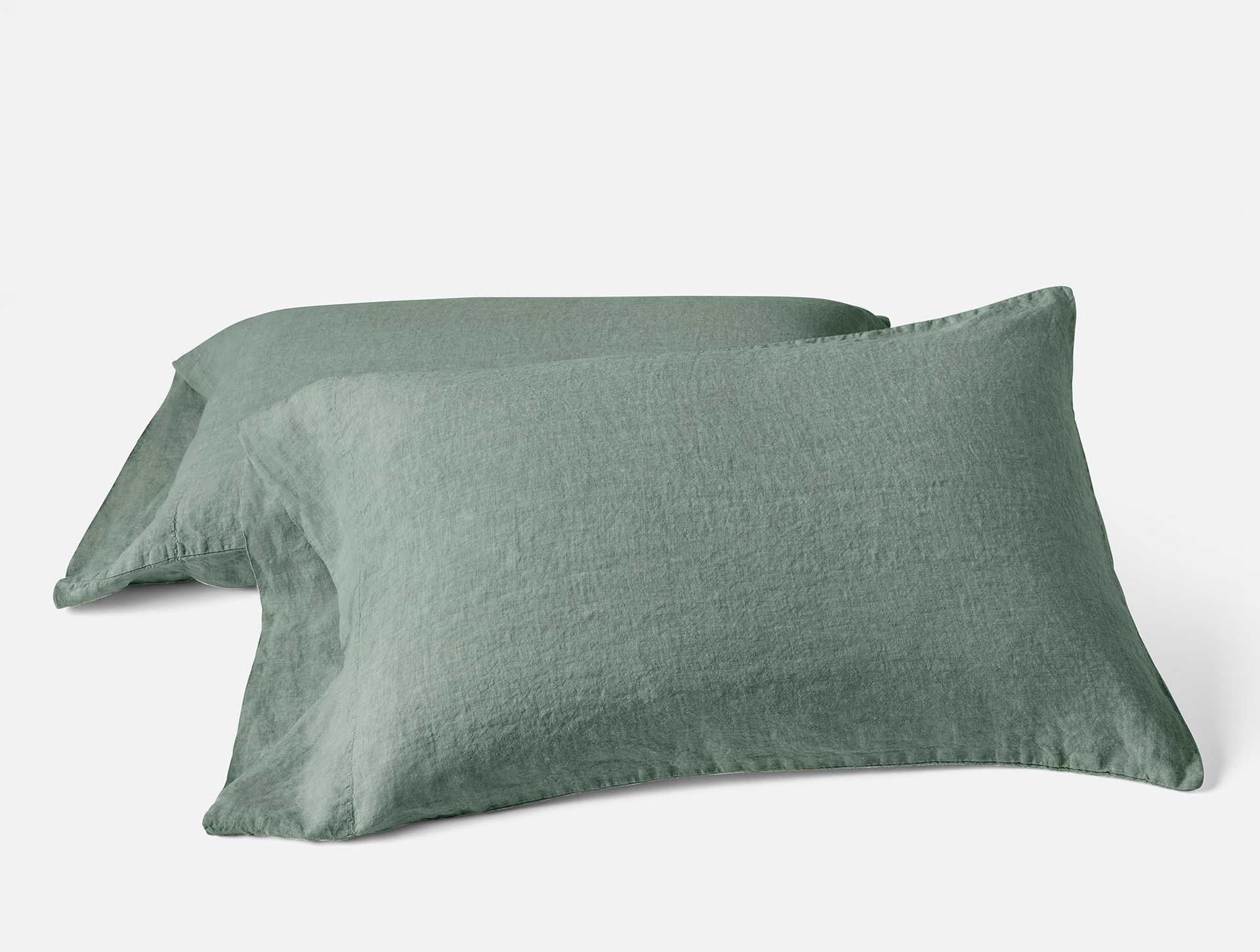
Organic Relaxed Linen Pillowcases, for example, are described as being made from organic flax grown in France and woven into linen in Portugal. Their relaxed feel, pick-stitched cuffs and cold, gentle-cycle care instructions illustrate details worth checking when comparing linen pillowcases. Review the product measurements and closure information as well as the fabric description to determine whether a particular case suits your pillow.
To explore those specifications, see Organic Relaxed Linen Pillowcases. The listed care guidance recommends washing with like colors on a gentle cycle, tumble drying low and removing promptly; a warm iron is optional. Always follow the current care label on the item itself.
Cotton percale: crisp, smooth and matte
Percale describes a plain-weave construction rather than a fiber. Cotton percale is often chosen for its crisp, matte surface and fresh feel. It may suit sleepers who prefer a smoother, more structured hand than linen’s relaxed texture. As with any fabric, the feel depends on the yarn, weave, finishing and laundering—not just a headline thread count.
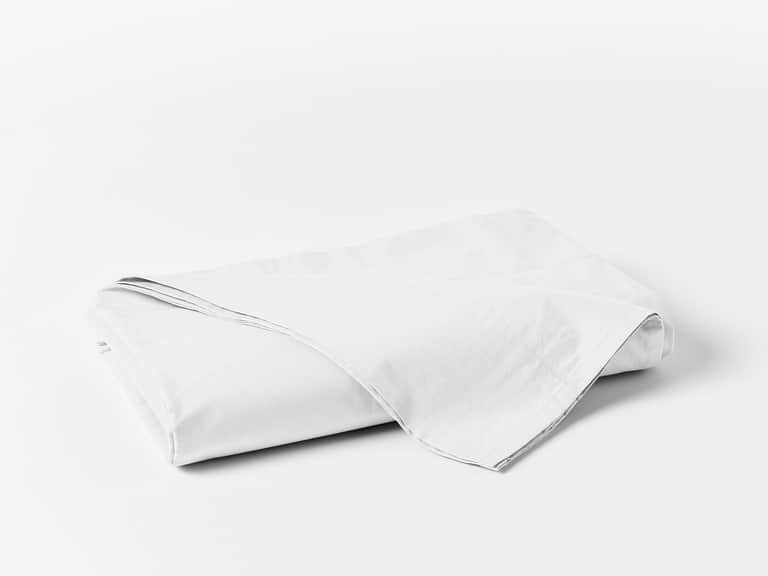
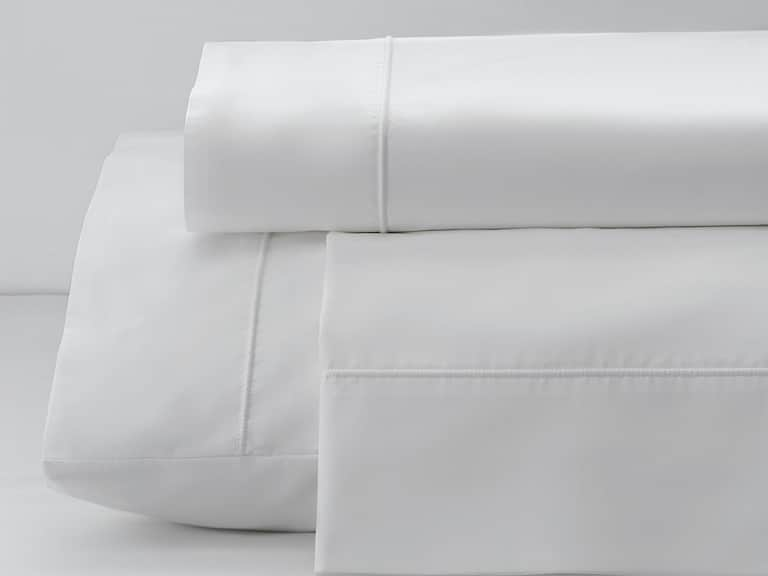
The BOVI Simply Percale Pillowcases Set is described as 100% cotton percale with a matte finish, simple piping and a set of two pillowcases. These details offer a useful example of what to look for when comparing percale options: fiber content, edge finish and the number of cases included. Confirm the exact dimensions and care instructions for the option you are considering.
Neither fabric is automatically the right choice for everyone. If you like a lived-in, textured surface, linen may appeal. If you prefer a cleaner, crisper feel, percale may be a better match. When possible, consider how a textile feels after laundering, since a new fabric can change in softness and drape with use.
Care affects fit as much as appearance
Frequent washing is part of keeping pillowcases fresh, but aggressive care can shorten a fabric’s useful life or alter its fit. Start with the sewn-in care label. Instructions vary by fabric, finish and construction, so do not assume every linen or cotton case should be washed the same way.
As a general habit, close any closures before washing, sort by color and avoid overloading the machine. A crowded wash can cause textiles to rub against one another and may leave detergent behind. Use the recommended cycle and temperature, and take care with bleach or strong stain treatments unless the label specifically permits them. For a small mark, follow fabric-specific stain guidance and test any treatment in an inconspicuous area first.
Drying matters, too. High heat can be hard on fibers and may contribute to shrinkage. Follow the label’s directions, and remove the case promptly if recommended. If you prefer a smooth finish, ironing may be suitable for some fabrics, but use the temperature and method specified for that textile. Linen’s natural relaxed appearance does not require a perfectly pressed finish.
Before the first wash, check that the case has enough room for the pillow. A very snug fit is less forgiving if the fabric changes slightly. Keep the product’s care instructions, especially if you buy pillowcases made from different materials, so that convenient washing does not come at the cost of comfort or fit.
Check the construction details before deciding
Product descriptions can reveal practical information that a photo or size label cannot. Look for the exact fabric content, finished dimensions, closure type, cuff or hem details and care directions. If the case comes in a pair, confirm that the stated measurements apply to each pillowcase and that the set includes the number you need.
- Dimensions: Compare the case’s finished measurements with your pillow’s width and length.
- Fabric content: Check whether the case is linen, cotton percale, a blend or another material.
- Closure: Find out whether it is an open end, envelope flap, buttons or a zipper.
- Edge finish: Note whether the design has a cuff, flange, piping or a simple hem.
- Care: Review washing, drying and ironing guidance before purchase.
- Set contents: Confirm the number of pillowcases and any size-specific differences.
Look for construction that appears orderly and secure. Straight, finished seams and a neatly made opening are useful signs of thoughtful workmanship, though they do not replace checking the dimensions. A decorative finish can be lovely, but it should not make the case awkward to insert or uncomfortable to sleep on.
A quick pillowcase fit check
Once you have the case, take a moment to test it before putting it into regular rotation. Insert the pillow carefully, align its corners and close or tuck the opening as designed. Then check the following:
- The pillow fills the case without being compressed into a narrow or misshapen form.
- The seams lie flat and do not look stretched or strained.
- The fabric is not so loose that it gathers into thick folds beneath your head.
- The closure keeps the pillow inside without a hard detail pressing against your face.
- The cuff or flange sits smoothly and does not twist around the opening.
If the pillow is difficult to insert, the seams pull taut or the corners remain compressed, consider a larger case. If a large amount of fabric remains unused and the pillow shifts inside, a smaller size or a different closure may give a neater fit. Try the pillow on the bed, because the way it feels when you lie down can be different from how it looks in your hands.
Common pillowcase mistakes to avoid
One common mistake is choosing by the label alone. Standard, queen and king names make shopping easier, but they are not precise enough to settle every fit question. Measuring the pillow and checking the case dimensions takes only a moment and can prevent an uncomfortable mismatch.
Another is treating thread count as a complete measure of quality. For a pillowcase, fiber type, weave, finish, stitching and care may matter more to your comfort than a single number. In particular, percale is a weave, and the feel of a percale case depends on more than the thread count listed in its description.
It is also easy to overlook the effect of the closure or edge finish. A case can have suitable dimensions but still feel wrong if the opening is awkward or a thick detail lands where your face rests. Finally, buying a tight case in the hope that it will “stretch out” can put unnecessary pressure on the seams. A comfortable fit should not depend on forcing the pillow into place.
Make the choice that fits your pillow—and your preferences
The best pillowcase is the one that fits the pillow without pulling, feels pleasant night after night and can be cared for in a way that suits your routine. Start with actual pillow dimensions, check the case’s finished measurements and consider how its opening and edge details will work in daily use. Then choose the surface you enjoy: linen for a relaxed, textured hand, or cotton percale for a crisp, smooth feel.
A little attention before buying can spare you the nightly nuisance of a pillow that slips, bunches or pushes against its seams. Measure once, read the details and give the case a quick fit check when it arrives. The result is a simpler, more comfortable part of the bedtime routine—and a bed that feels thoughtfully put together, from the pillow inside to the fabric around it.
Pillowcase questions, answered
Should a pillowcase be the exact same size as the pillow?
Not necessarily. A little ease can make insertion easier and prevent the pillow from feeling compressed. The case should still be close enough that the pillow does not shift excessively or leave large folds of unused fabric. Compare actual measurements and consider the pillow’s loft as well as its length and width.
Can I use a queen pillowcase on a standard pillow?
Often, but the fit depends on the dimensions and closure. Extra length may leave fabric that can bunch or fold. If you prefer a smooth, secure surface, a case closer to the pillow’s measurements may work better.
Which is cooler: linen or percale?
Both can feel breathable, but they have different textures. Linen has a relaxed, textured surface, while cotton percale is usually crisp and smooth. Your experience will depend on the fabric’s construction, finishing, room conditions and personal preference.
Will pillowcases shrink in the wash?
Some fabrics can shrink, particularly when washed or dried at temperatures higher than recommended. Follow the care label and avoid assuming that every fiber responds identically. If the case already fits tightly, even a small change in dimensions could affect comfort.
What should I do if my pillowcase bunches overnight?
First check whether the case is substantially larger than the pillow and whether its closure is securing the pillow. If the size seems appropriate, inspect the pillow’s shape and fill; a pillow that has become lumpy or flattened may move differently inside its case. A better-matched size or closure may help create a smoother fit.